When we ask how natural perfume differs from conventional fragrance, the clearest answer is this: the difference usually begins with the formula’s raw materials, but it does not end there. Ingredient origin affects the scent palette, cost, consistency, labeling, and sometimes the way a fragrance wears. It does not, however, automatically determine whether a perfume is safer, longer lasting, or more sustainable.
TL;DR: Natural perfume is typically made primarily or entirely from botanical materials such as essential oils, resins, absolutes, and extracts. Conventional fragrance commonly uses synthetic compounds alongside, or instead of, natural materials. Neither category is automatically superior. The most useful comparison is formula by formula: check ingredients, carrier, concentration, intended wear, and any allergenic substances that may matter to you.
Table of contents
The ingredient difference starts with origin
Natural perfume uses botanical aromatic materials
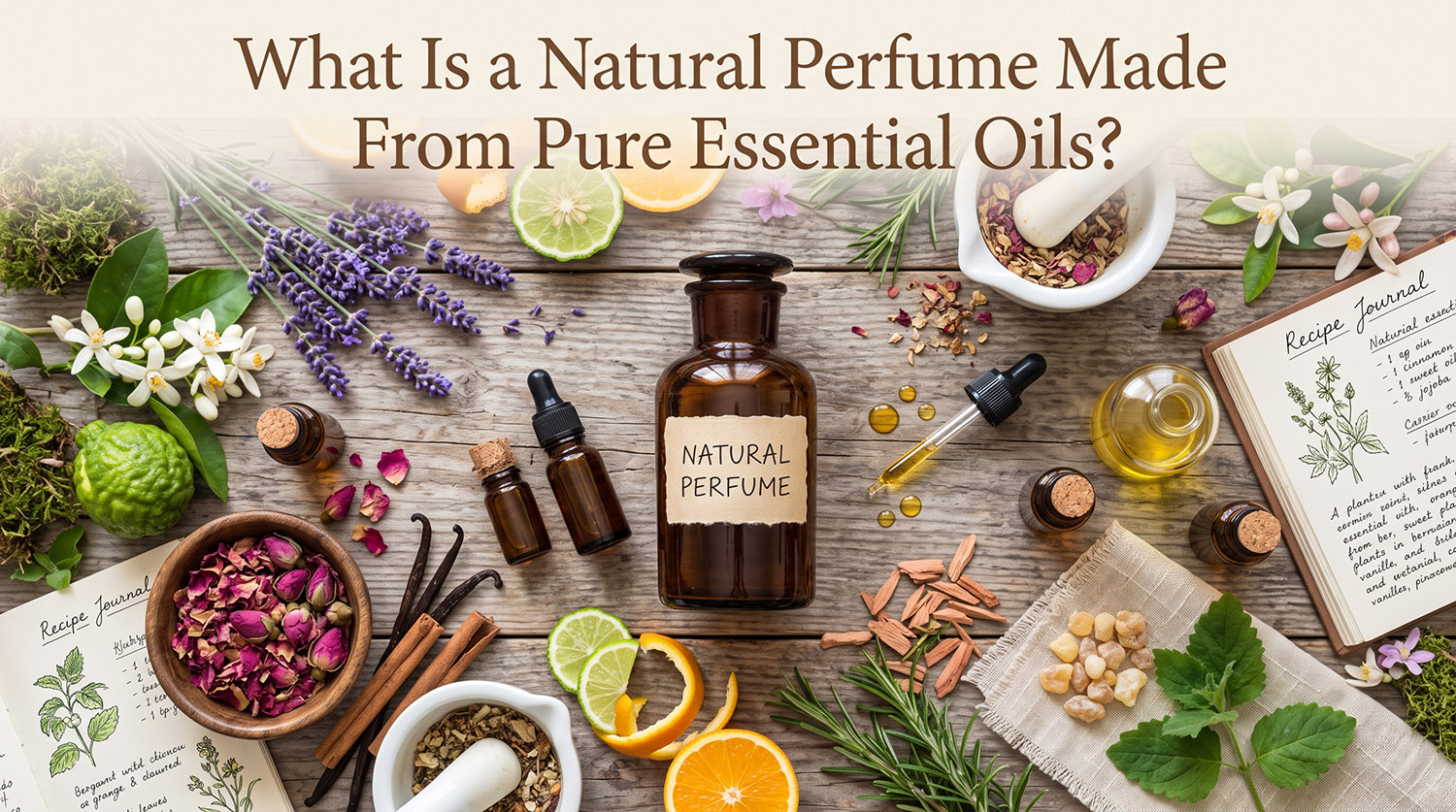
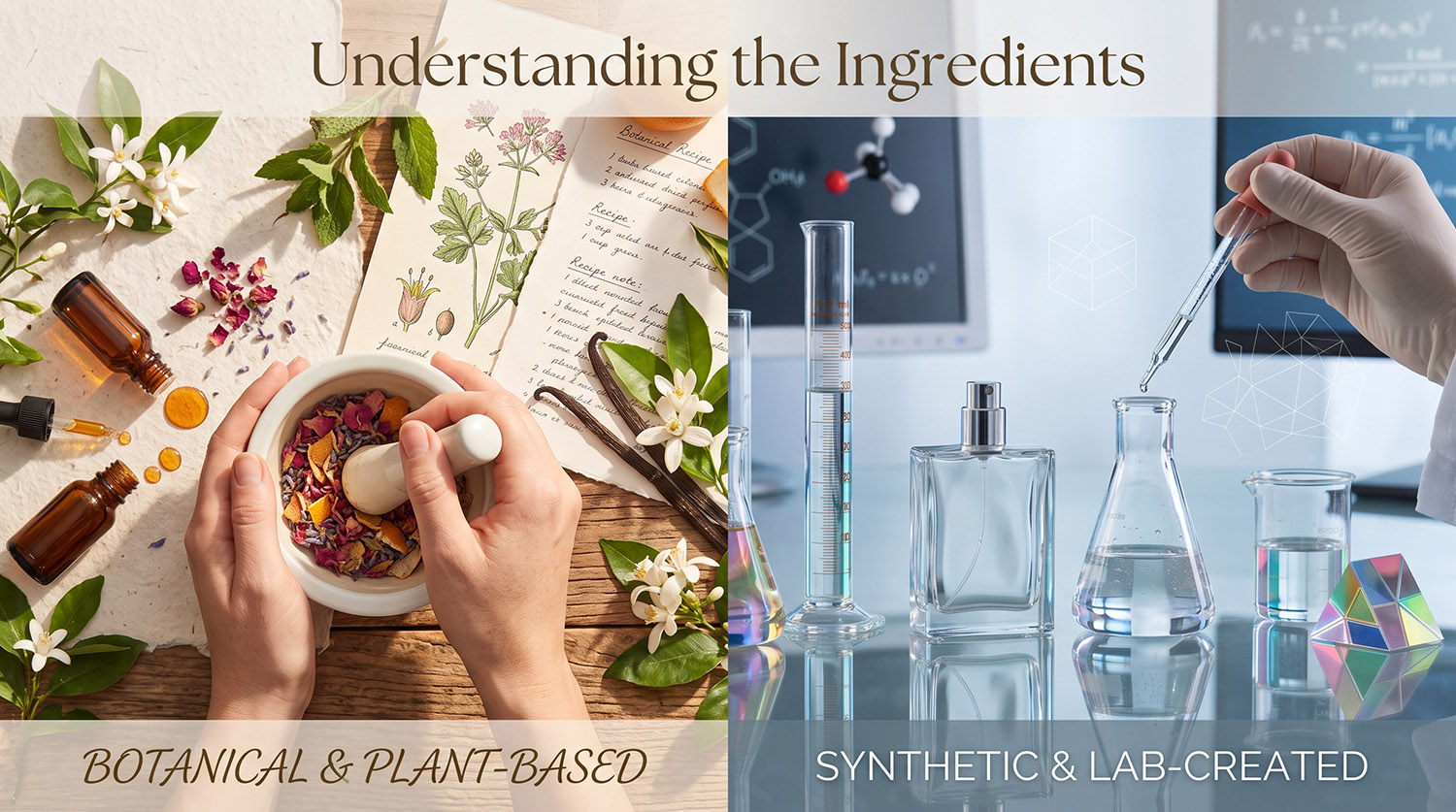
Natural perfume usually draws its scent from plant derived materials. These can include essential oils distilled from leaves, flowers, woods, peels, or roots; resinous materials such as frankincense; botanical absolutes; tinctures; and CO₂ extracts.
An essential oil is not one single aroma molecule. It is a naturally occurring mixture of many volatile compounds. A citrus oil, for example, contains a shifting combination of bright, fast evaporating molecules that create an immediate sparkling effect. A resin or wood extract may contain heavier materials that linger closer to the skin.
This complexity is part of natural perfume’s appeal. One botanical ingredient can bring several facets at once: green, floral, woody, balsamic, earthy, or subtly spicy. Still, “natural” is not a universal legal formula category. One brand may mean 100% botanical. Another may mean mostly botanical, certified natural under a particular standard, or simply inspired by plant materials.
For a closer look at the distinction between plant based materials and manufactured scent ingredients, see what makes a perfume truly natural.
Conventional fragrance often relies on aroma chemicals
Conventional fragrance is commonly built with synthetic compounds, often called aroma chemicals. These are individual odor molecules made in a laboratory or isolated and refined for perfumery use. They can create highly precise effects, from a transparent clean musk to a marine accord, a mineral note, or a fruit effect that has no direct botanical equivalent.
Synthetic does not necessarily mean harsh, low quality, or unsafe. It describes how a material is made or sourced, not its risk profile at a particular concentration. A conventional fragrance can also contain natural essential oils, absolutes, and extracts. In fact, many modern perfumes are hybrids, using both natural and synthetic materials to balance scent character, price, stability, and performance.
A useful comparison at a glance
| Feature | Natural perfume | Conventional fragrance |
|---|---|---|
| Primary aromatic materials | Botanical extracts, essential oils, resins, absolutes, tinctures | Often synthetic aroma chemicals, frequently combined with natural materials |
| Scent palette | Dependent on available botanical materials | Can include botanical, abstract, and highly precise synthetic effects |
| Batch consistency | May vary with harvest, extraction, and raw material supply | Often designed for close consistency across batches |
| Common format | Oil, alcohol spray, balm, or solid perfume | Usually alcohol spray, though oils and solids also exist |
| Best way to evaluate | Verify the full ingredient approach and claims | Review the formula approach, allergen information, and intended use |
Why the distinction is not a simple binary
It is tempting to treat natural and conventional fragrance as opposites. In practice, there is a spectrum. A fragrance may be fully botanical, natural heavy with a few synthetic materials, or mostly synthetic with a small amount of natural oil for character.
That middle ground matters. A perfumer may use a botanical rose absolute for richness while adding a synthetic material to improve stability or create a clean, airy effect. Another formula may be entirely essential oil based but use a carrier oil to change how it diffuses on skin. If we judge only by a front label, we can miss the details that shape the actual wearing experience.
Formula architecture shapes the fragrance experience
Natural perfume is built around a limited but expressive palette
A natural perfumer works with materials that have seasonal variation, different extraction methods, and distinct safety limits. This can make the process creative but demanding. A lavender essential oil from one harvest may smell slightly greener or sweeter than the next. A sandalwood material can vary according to origin and availability.
That variation is not automatically a flaw. It can be part of the character of botanical perfumery. But it means natural formulas may require careful adjustment from batch to batch to preserve the intended profile.
A discussion among DIY fragrance makers notes that limiting a formula to essential oils can restrict certain scent effects, performance options, and safety choices, though this is community experience rather than a universal rule. The natural perfumery discussion on Reddit is useful for understanding why some makers choose hybrid formulas rather than treating synthetic materials as automatically off limits.
Conventional fragrance offers greater molecular precision
Synthetic compounds let perfumers work with materials in a more targeted way. Instead of relying on an entire botanical extract, they may use a specific molecule to create a crisp pear effect, a soft skin scent, a persistent amber impression, or a cool metallic note.
This precision can support consistency. It can also make it easier to build fragrance structures that would be difficult to achieve with botanical materials alone. A conventional perfume may use a synthetic fixative to slow evaporation, a stable floral ingredient to maintain a recognizable heart note, or a low odor solvent to improve spray performance.
The trade off is philosophical as much as sensory. Some buyers prefer the expressive irregularity and recognizable plant character of a natural formula. Others want a fragrance that smells nearly identical every time they purchase it. Neither preference is wrong.
Carriers change the experience as much as aromatic materials
The carrier is the base that holds and delivers the fragrance. In an alcohol spray, perfumer’s alcohol evaporates quickly, helping the scent travel outward. In an oil perfume, a carrier oil such as jojoba stays on the skin longer and releases scent more gradually.
That is why it is misleading to compare an oil based natural perfume with an alcohol based designer spray and attribute every difference to naturalness. The oil may feel more intimate because it diffuses slowly. The spray may seem stronger at first because alcohol carries volatile notes into the air.
For a softer, close to skin ritual, perfume oils can be a useful format to explore. For a scent trail that is noticeable across a room, an alcohol spray may better match your expectations, whether the formula is natural, conventional, or hybrid.
Scent development, longevity, and projection
Natural fragrances may change more noticeably over time
Many people notice stronger movement between the opening, heart, and dry down in botanical fragrances. This can happen because essential oils and extracts contain many compounds with different evaporation rates. Bright citrus materials may disappear quickly, while woods, resins, and balsamic notes remain.
Consumer fragrance guides commonly describe natural scents as developing more noticeably during wear than formulas designed around a steadier scent profile. This perspective is described by Prosody London’s explanation of natural perfume, NYC Perfume’s overview of plant based perfumes, and its guide to choosing a botanical fragrance.
This is a tendency, not a guarantee. A carefully structured natural perfume can remain recognizable for hours, while a conventional citrus cologne can vanish quickly. The formula matters more than the category name.
Longevity depends on volatility, concentration, and application
There is no honest universal answer to whether natural perfume lasts as long as conventional fragrance. A fragrance with fast evaporating citrus, mint, and delicate floral materials may fade sooner than one built around resins, woods, vanilla, patchouli, or dense balsams. This applies to both natural and conventional formulas.
The main variables are:
• Volatility: Fast evaporating materials create lift but may not persist.
• Concentration: A higher concentration of aromatic materials can increase intensity, though it can also increase irritation risk if a product is not formulated responsibly.
• Carrier: Alcohol usually creates a brighter opening and wider diffusion. Oil usually creates slower, more intimate release.
• Formula structure: Base materials, fixatives, and the balance between top, heart, and base notes determine how the scent changes.
• Wear conditions: Heat, dry skin, clothing, humidity, and application amount can all alter perceived performance.
Natural perfumes are often associated with shorter or less predictable wear, but available consumer sources do not provide a controlled, universal hour by hour comparison. This natural perfume overview from DHgate Lifestyle reflects that common perception while leaving room for formula specific exceptions.
Compare perfumes fairly before deciding one lasts longer
A fair test is surprisingly simple. Apply the same number of sprays or the same amount of oil to the same skin location on separate days. Test at a similar time, in similar weather, and avoid layering with strongly scented body products.
Check the fragrance at several points: immediately after application, after thirty minutes, after two hours, and later in the day. Ask two different questions: “Can I still smell it?” and “Can someone standing near me smell it?” The first measures skin longevity. The second is closer to sillage.
Fair warning: Reapplying a natural oil perfume during the day does not mean it has failed. Some people deliberately choose this quieter rhythm because it turns fragrance into a personal ritual rather than a constant scent trail.
Safety, sustainability, and labels require closer reading
Natural does not automatically mean safer for sensitive skin
Essential oils and botanical extracts can contain allergenic substances. Natural materials may irritate skin, trigger an allergic response, or cause sensitivity in some people, especially when used at unsuitable concentrations or on compromised skin. Citrus oils can also present special concerns depending on the material and how it is used.
Synthetic ingredients can also cause reactions. The practical lesson is not to assume that one origin is harmless and the other is risky. Consider the specific formula, the product’s directions, your known sensitivities, and the amount applied.
If you have a history of fragrance allergy, eczema, or unexplained reactions, a patch test may be helpful, but it cannot guarantee that a reaction will never occur. Consider consulting a qualified healthcare professional for persistent or serious skin concerns.
“Clean,” “natural,” and “free from” are not interchangeable claims
Marketing language can sound more precise than it is. “Natural” may describe the aromatic materials. “Clean” often reflects a brand’s own ingredient policy. “Free from petrochemicals” is different from “free from synthetic fragrance,” because a formula may avoid one category while still using other synthetic or processed materials.
When comparing products, look for clear answers to these questions:
- Is the fragrance described as 100% natural, natural heavy, or a blend of natural and synthetic materials?
- Does the brand explain its carrier, such as alcohol, jojoba oil, or another base?
- Is there an ingredient list and allergen information where applicable?
- Does the brand make realistic claims about wear, sillage, and skin compatibility?
- Are sustainability claims specific enough to assess, or are they broad promises without detail?
UNLEASHED describes its own approach to essential oil based fragrance and intimate oil application on our difference. Clear product information is more useful than a vague promise that a perfume is simply “better.”
Sustainability depends on the material and supply chain
Natural ingredients can be renewable, but plant origin alone does not prove a small environmental footprint. Agricultural practices, land use, water demand, extraction methods, transport, packaging, and the scarcity of a particular botanical all matter.
Synthetic materials can reduce reliance on scarce natural resources or replace scent effects that are difficult to obtain responsibly from plants. On the other hand, synthetic production has its own energy, sourcing, and waste considerations. The most responsible choice is rarely obvious from a single word on the box.
A thoughtful buyer can favor transparency: ingredient sourcing where available, restrained packaging, refill options if offered, and a fragrance they will genuinely use rather than discard.
Key takeaways
What matters most when choosing
• Choose a natural perfume if you value botanical materials, nuanced evolution, an intimate wearing style, and a formula that avoids synthetic aroma chemicals.
• Choose a conventional fragrance if you want a broad range of scent effects, very consistent batches, stronger diffusion, or a particular abstract note that botanicals may not reproduce.
• Choose a hybrid fragrance if you want both recognizable natural materials and the technical flexibility of selected synthetic compounds.
• Choose an oil format for slower diffusion and close to skin wear. Choose an alcohol spray when you want a more immediate opening and broader projection.
• Avoid assumptions based on labels alone. Natural, clean, non toxic, sustainable, and hypoallergenic are not interchangeable terms.
The most balanced way to think about the choice
Natural perfume and conventional fragrance answer different creative and practical needs. One is not inherently more refined, safer, or more ethical in every situation. We can make a better decision by matching the formula to the experience we want: a forest like resin close to the wrist, a bright citrus opening that fills the air, a stable signature scent, or a botanical composition that changes gently through the day.
Frequently asked questions
A natural perfume is generally made with botanical aromatic materials such as essential oils, absolutes, resins, tinctures, and plant extracts. However, there is no single universal meaning used by every brand, so it is worth checking whether “natural” means entirely botanical or predominantly botanical.
Yes. Many modern fragrances are hybrids. They may combine essential oils or extracts with synthetic aroma chemicals to improve consistency, create specific effects, or support performance. A hybrid formula is not necessarily lower quality; it is simply built with a broader material palette.
Not automatically. Essential oils and natural extracts can contain allergenic substances and may irritate some people. Synthetic ingredients can also cause reactions. If sensitivity is a concern, review the product information, use fragrance sparingly, and seek professional guidance for known allergies or persistent reactions.
Skin temperature, moisture, natural skin oils, application amount, and the perfume’s carrier can all change what you notice. Botanical materials also contain complex mixtures of aroma compounds, so their shifts during evaporation can feel especially distinct from person to person.
Sometimes, but there is no universal rule. A natural fragrance built around woods, resins, vanilla, or patchouli may last well, while a citrus focused formula may fade faster. Compare the specific scent, its concentration, carrier, and application conditions rather than judging longevity by naturalness alone.
No. “Clean fragrance” usually refers to a brand’s ingredient standards or exclusions, but the term has no single shared definition. A clean fragrance may use synthetic materials, while a natural perfume may use only botanical materials. Always look beyond the front label.
Botanical extracts can be costly because of cultivation, harvesting, extraction, seasonal variation, and material availability. Natural only formulation can also limit substitute options. Price alone does not prove quality, but it often reflects the reality that certain plant materials require substantial resources to produce.
Test one fragrance at a time on clean skin. Apply a consistent amount, wait for the dry down, and assess it at several points during the day. Notice both comfort and character: whether it feels pleasant close to the skin, whether it develops in a way you enjoy, and whether its projection suits your setting.
Sources and references
• prosodylondon.com: https://prosodylondon.com/blog/what-is-natural-perfume/
• lifestyle.dhgate.com: https://lifestyle.dhgate.com/natural-perfume-explained-how-to-find-scents-that-feel-good-on-your-skin-and-match-your-values/
• nyc.ph: https://nyc.ph/blogs/perfume/the-allure-of-plant-based-perfumes-in-the-world-of-fragrances
• reddit.com: https://www.reddit.com/r/DIYfragrance/comments/1jywere/natural_perfumery/
• nyc.ph: https://nyc.ph/blogs/perfume/the-science-of-natural-perfume-7-expert-steps-to-choose-your-perfect-botanical-fragrance